


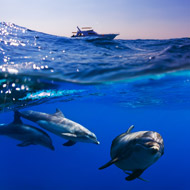
Dolphins found to possess important antioxidant protein
A recent study has revealed antioxidant proteins found in dolphins may hold clues about potential treatments for degenerative diseases in humans.
The study commenced when Dr Michael Janech, director of the Medical University of South Carolina's (MUSC's) Nephrology Proteomics Laboratory, learned that managed dolphins in the US Navy Marine Mammal programme were living much longer than wild dolphins.
The managed group were developing diseases consistent with human metabolic syndrome, including insulin resistance and fatty liver disease.
Through funding provided by the Office of Naval Research, Dr Janech joined forces with Stephanie Venn-Watson, director of the National Marine Mammal Foundation’s Translational Medicine Research Programme (NMMF) in San Diego, and Randall Wells of the Chicago Zoological Society’s (CZS) Sarasota Dolphin Research Programme in Florida, to explore the inconsistency further.
The laboratory began tracing the insulin-sensitising hormone, adiponectin, in populations of wild bottlenose dolphins. The team also analysed basic proteomic differences in human and dolphin serums so as to verify the relevance of their studies.
The research revealed that 11 proteins were around 100 times more prevalent in dolphin serum than in humans. This data came as a surprise given that key proteins in mammals are usually stable across species.
The group initially disregarded this finding as a difference in genetic ancestry - some mammals diverged off the evolutionary tree of development and evolved into odd-toed or hoofed mammals and primates.
Bottlenose dolphins evolved from even-toed ungulates, such as pigs, deer and giraffes. To verify this, the scientists recorded the serum proteome in pigs. Again, the team were stunned by the results that showed five of the proteins had a 100-fold difference, including vanin-1 and adiponectin. These findings could not be excluded as an evolutionary anomaly.
Adiponectin is known to be elevated in dolphins, however, vanin-1 elevation was a new finding. These increased levels have been linked to reduced liver function in wild dolphins that may suggest a protective effect in avoiding metabolic syndrome. The team also discovered that vanin-1 played a key role in the production of vitamin B5. Through the production of vitamin B5, an antioxidant known to protect tissues from hypoxia and re-oxygenation when diving and resurfacing, was revealed.
This revelation explains the reason why humans suffer organ damage when oxygen supplies are cut off and dolphins do not. Dolphins are capable of restricting blood flow to vital organs, including the heart, liver, lungs and kidneys, for long periods of time, without suffering any injury.
Dr Janech said: “This is the first step. We wanted to ask what’s different in an animal that can do something that would hurt a human, and [that] they do every single day. And can we take it back to human medicine?”
Dr Janech believes there is much to be learned from the field of biomimicry, particularly when it is aligned with the field of proteomics.
Janech and his colleagues will monitor proteomes from a number of different diving and non-diving marine mammals, as well as land-bound mammals.
They have continued their current collaboration, whilst also including graduate students from the College of Charleston’s Grice Marine Laboratory and investigators from the National Institutes of Standards and Technology at Hollings Marine Laboratory, in order to help with their measurements.


 Eligible members of BEVA will be able to vote for their Council team until Monday, 17 August 2026. Members will have received an election email on 17 July.



