


Gorilla has successful dental surgery
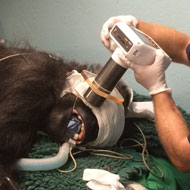
"Romina is the first gorilla I’ve treated and I definitely drew on my experience with human patients," said Dr Smithson.
A 36-year-old western lowland gorilla has had successful dental surgery, at her home at Bristol Zoo.
The female gorilla, named Romina, had been undergoing a routine health check when vets at Bristol Zoo detected problems in her mouth. The team contacted dual-qualified veterinary and human dental surgeon, Dr Alex Smithson, who agreed to undertake the surgery, despite having never operated on a gorilla.
Like humans, gorillas have 32 teeth, however, they have adapted to chewing through large quantities of plant matter and are therefore larger that human teeth. Dr Smithson has treated both humans and zoo animals throughout his career, and as gorilla mouths are very similar to human mouths, he felt confident he could help.
Romina’s surgery was performed under general anaesthetic and took around two hours. During this time, Dr Smithson completed a full dental examination and took x-rays, assisted by Bristol Zoo’s keepers, veterinary nurses and vets.
The portable dental x-ray equipment helped with the diagnosis of a problematic gum overgrowth on one side of Romina’s mouth and three infected teeth on the opposite side that were removed.
Dr Smithson said: “I was thrilled to be in a position to help the veterinary department at Bristol Zoo look after this beautiful animal. Romina is the first gorilla I’ve treated and I definitely drew on my experience with human patients. It all went very well thanks to the care of the Bristol Zoo staff and the whole team should be praised for their dedication to Romina’s welfare.”
One of Bristol Zoo’s staff veterinary surgeons, Rowena Killick, who was present at the procedure, said: “This was the first time we had ever asked a dual qualified vet and human dentist to treat any of our animals. We were extremely impressed with both Dr Smithson’s work and how streamlined the portable X-ray system made the procedure.
“It’s really important that we carry out regular dental checks on our animals to treat them for all kinds of conditions such as a build-up of tartar, or infections. Romina now has a clean bill of health and didn’t hold back from chomping on her favourite sweet potato after she came round from general anaesthesia.”
The surgery took place in September 2016, prior to Romina being mixed with an infant gorilla, Afia, to ensure she was feeling 100 per cent for the introduction.


 Eligible members of BEVA will be able to vote for their Council team until Monday, 17 August 2026. Members will have received an election email on 17 July.



