


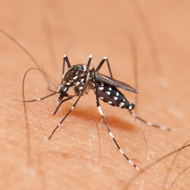
Researchers hope to significantly reduce new cases
Scientists are set to deploy millions of modified mosquitoes in Brazil and Columbia to combat Zika and other mosquito-borne viruses.
Supported by the UK Government, USAID, Wellcome and The Bill & Melinda Gates Foundation, the innovative control method will use naturally occurring Wolbachia bacteria.
Found in up to 60 per cent of all insect species, research shows that Wolbachia can significantly reduce the capacity of mosquitoes to pass viruses to humans. But Wolbachia does not occur naturally in Aedes aegypti - the mosquito species primarily responsible for transmitting diseases like Zika and dengue fever.
Established in 2011, The Eliminate Dengue Program (EDP) has pioneered a way to transfer Wolbachia into Aedes aegypti mosquitoes. Years of research show that Wolbachia makes this species of mosquito incapable of transmitting viruses.
Scientists say when mosquitoes with Wolbachia are released into an area, they breed with local mosquitoes and pass the bacteria to their offspring. Within a few months, the majority of mosquitoes carry Wolbachia and this effect is then self-sustaining without the need for further releases.
The EDP has been conducting Wolbachia field trials in Indonesia, Australia and Vietnam for several years. In 2014, the team initiated small-scale field trials in Rio de Janeiro, Brazil and Bello, followed by Colombia in 2015.
Funding announced on Monday (26 October) will finance the rapid scale-up of Wolbachia deployments in Latin America, commencing early 2017. Wolbachia coverage will then extend across Bello and other parts of Antioquia and parts of the greater Rio de Janeiro area.
“Wolbachia could be a revolutionary form of protection against mosquito-borne disease. It’s affordable, sustainable, and appears to provide protection against Zika, dengue, and a host of other viruses,” explained Dr Trevor Mundel, president of the Global Health Division of the Bill & Melinda Gates Foundation. “We’re eager to study its impact and how it can help countries.”
Professor Scott O’Neill, EDP's programme leader added: “We are incredibly grateful to our funding partners for enabling us to expand this research across two large urban areas vulnerable to mosquito - transmitted disease.
“The Gates Foundation and Wellcome have supported our work since 2005 and their ongoing commitment, along with new donors, to reducing the spread of mosquito-borne viruses is pivotal to us moving from small scale trials to large city-wide deployment.”
Over the next two to three years, planned deployments will scientifically measure the impact of the intervention on disease transmission in large, urban settings.
Researchers hope to show a significant reduction in new cases of Zika, dengue and chikungunya.


 Eligible members of BEVA will be able to vote for their Council team until Monday, 17 August 2026. Members will have received an election email on 17 July.



