


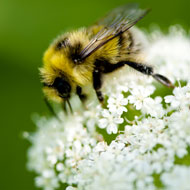
Bumblebees' learning affected by pesticide, study finds
New research suggests neonicotinoids can impair a bumblebee's ability to learn, with negative consequences for a type of pollination that requires bees to produce vibrations.
Scientists from the University of Stirling, Scotland, wanted to find out how 'buzz pollination' is affected by the controversial pesticides, neonicotinoids.
Buzz pollinated plants - for example tomatoes, potatoes and aubergines - protect their pollen within the anther. Accessing it requires a complex set of behaviours. Bees produce vibrations, or buzzing, to shake the pollen out of the anther. This is contrary to standard pollination, where bees simply brush the pollen off the plant's anther.
Stirling scientists split a bumblebee colony into three groups of workers and fed them different field-realistic amounts of the neonicotinoid, thiamethoxam. The team then measured the amount of pollen collected from buffalo-bur flowers and analysed the bees' buzzing.
Preliminary findings, which were presented at the British Ecological Society's annual meeting this week, show that learning is key to this type of pollination. The more bees practice, the more pollen they collect. However, those fed field-realistic levels of thiamethoxam did not collect more pollen over time, suggesting the pesticide affects their ability to learn.
Lead author Dr Penelope Whitehorn explained: "The study adds to the now large body of evidence from lab and field-based studies that neonicotinoids reduce learning and memory in bees, impair their communication, foraging efficiency and immune systems and, crucially, reduce their reproductive success as well as the pollination services that they can provide.
"These chemicals do have serious implications for wild bee populations in agricultural landscapes but some, notably from the agrochemical industry, still promote their use."
An EU moratorium in 2013 limited the use of three neonicotinoids on crops that are attractive to bees. This remains in place and is currently undergoing a review by the European Food Standard Agency, which is set to conclude in 2017.


 Eligible members of BEVA will be able to vote for their Council team until Monday, 17 August 2026. Members will have received an election email on 17 July.



