


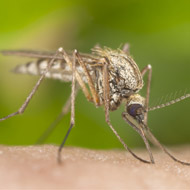
Model can distinguish between midge and animal movement
A new model that can determine vectors for bluetongue and Schmallenberg virus has been developed by scientists at The Pirbright Insitute. Researchers hope the model could be applied to other diseases to help better inform control strategies.
Writing in PLOS Computational Biology, researchers use the model to establish that 90 per cent of bluetongue transmission between farms is a result of midge dispersal, while for Schmallenberg it is 98 per cent.
“Previous models used to study the 2007 bluetongue outbreak in the UK were able to show how the disease spread, but were not sophisticated enough to determine the primary route of transmission which is crucial in helping to bring an outbreak under control quickly,” explained Dr Simon Gubbins, group leader for transmission biology at the Institute.
“Our new model is able to distinguish between disease that is spread through midge movement and through animal movement. For both viruses, we have shown that insect movements account for the majority of spread between farms. Animal movements play an important role in introducing disease to new areas, but they cannot sustain an epidemic on their own.
“Importantly, the approach we have established for BTV and SBV could also be applied to other diseases spread by biting midges”.
Bluetongue virus and Schmallenberg virus infect cattle and sheep, causing huge economic losses to farmers across the world. Both diseases are vector-borne, meaning they need another organism to aid transmission between animals. Until now, however, it was not clear whether biting midges or the movement of animals made the most significant contribution to transmission.
Researchers say that by enabling a better understanding of the impact of biting midges and animal movement in transmission, the new model will help ensure outbreak control strategies and procedures are better informed.
It may also change the way livestock movements are controlled and will enable more accurate predictions about the spread of an outbreak and where it would be best to vaccinate.


 Eligible members of BEVA will be able to vote for their Council team until Monday, 17 August 2026. Members will have received an election email on 17 July.



