


Researchers learn from the past to prepare for the future
Researchers are calling on governments to protect big cat species and their prey, as a new study shows that lions face the same threat as extinct sabre-toothed tigers.
Writing in the journal Ecography, researchers assess whether the Ice Age extinction trend could be applied to big cat populations today.
Using a new global database FelidDET, the team analysed the cause of extinction of seven large cats from the Ice Age, including sabre-toothed tigers, the case and American lion and the American cheetah.
They found that if these animals were alive today, only 25 per cent of their preferred prey species would remain across their former natural ranges. The majority have gone extinct, in part due to human pressure.
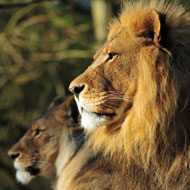
The team also used the database to find out if a similar decline in the availability of prey could lead to the demise of some of the world’s best-known big cats. It revealed that if all the currently threatened and declining prey species were to go extinct, just 39 per cent of the African lion’s prey and 37 per cent of Sunda clouded leopards would remain.
Even more concerning, researchers say, is that if this prey loss trend continues, both of these cats will be at high risk of extinction.
“Where prey species have, or are likely to become extinct, this poses a serious risk to the big cat species which feed on them and we now know this is the continuation of an unhappy trend which began during the last Ice Age,” commented Dr Chris Sandom from the University of Sussex.
“We need to buck this Ice Age trend once and for all and to reinforce the urgent need for governments to protect both big cat species and their prey.”
Professor David Macdonald, co-author and director of the University of Oxford’s Wildlife Conservation Research Unit added: “The fairy-tale consequences of Old Mother Hubbard’s cupboard being bare are all too vividly real for modern big cats.
“Our study of the consequences of prey loss – ‘defaunation’ in the jargon - is about, in everyday language 'what if' or perhaps better 'if only': without the extinctions of the Pleistocene, in which the fingerprints of humanity are all to incriminating, there would have been between one and five more felid species in most places today.
“The Churchillian aphorism that those that fail to learn from history are doomed to repeat it was painfully in mind when we saw how many of the prey of lions and East Africa and of clouded leopards in Indo-Malaya look set to go down the same drain down which their counterparts in other regions have already been flushed.”


 Eligible members of BEVA will be able to vote for their Council team until Monday, 17 August 2026. Members will have received an election email on 17 July.



