


Success for red squirrel project
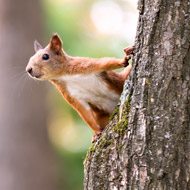
Red squirrels are now rare in the UK, with just 138,000 individuals left.
A project to reintroduce red squirrels to their old forest homes in Northwest Scotland has been called a success. Conservationists say there is evidence of breeding and natural expansion by the new populations.
Conservation charity Trees for Life is aiming to reintroduce the species in suitable native woodlands in the Highlands, from where it has been lost. The first squirrels were relocated between the springs of 2016 and 2017.
Wildlife officer Becky Priestley commented: “Early indications are that this could be a real wildlife success story. The new squirrel populations are not only flourishing and breeding in their new homes, they are also starting to spread out into new areas - with squirrels being sighted as far as 15 kilometres away.”
Red squirrels are now rare in the UK, with just 138,000 individuals left. Populations have suffered catastrophic declines due to the reduction of forests to isolated fragments, on top of disease and competition from the introduced grey squirrel.
As they travel between trees and avoid crossing large open spaces, they cannot return to these isolated forest areas without help. Trees for Life is aiming to establish eight new populations.
The charity says it has evidence that the relocated squirrels have been breeding two years in a row at Shieldaig in Wester Ross, where the first 33 animals were released. Natural recolonisation of other areas appears to have begun there.
Last year the squirrels spread throughout much of the habitat, with one sighting 13 kilometres away beyond Loch Torridon. Further sightings have been reported in the same area this year, and others two kilometres further away, at Inveralligin.
Twenty squirrels were released on the Coulin Estate and there is evidence of feeding across the Coulin woodlands, as well as images captured on specialised cameras. Regular sightings have been reported at Plockton since 30 squirrels were released there earlier this year.
Community involvement is at the heart of this project, with local people reporting sightings, monitoring the squirrels and carrying out supplementary feeding.
Annual monitoring at Coulin and Plockton is set to begin next spring and will involve observations of feeding signs, drey surveys and sightings records.


 Eligible members of BEVA will be able to vote for their Council team until Monday, 17 August 2026. Members will have received an election email on 17 July.



