


What's really going on in the veterinary workforce?
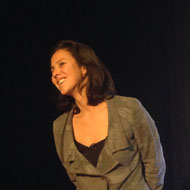
Professor Michelle Ryan from the University of Exeter speaking at BVA Congress.
"The 'female gendered' nature of the veterinary career is changing the demographics and expectations of veterinary surgeons. There is also an effect being precipitated by the arrival of the millennial generation in the profession," said Professor Michelle Ryan from the University of Exeter speaking at the BVA Congress in London.
She said that there is a need to address the drop in vets' motivation and career satisfaction that is occurring with increased frequency; together with the fact that many vets may show a drop in their confidence related to fulfilling stereotypes, and a lack of appropriate role models. The increased emphasis on a blame culture is having negative consequences too.
There is also a need for flexible working, which is prompted by long hours and a desire to achieve a good work/life balance.
Professor Ryan pointed out that all these factors had been identified during the 'Vet Futures' initiative as being important and had been distilled into three core issues meriting further investigation and understanding – confidence and ambition; expectations of vets and clients; and what drives work/life balance decisions.
"Are there gender differences in confidence?" she asked.
In a recent study, it was found that almost 100 per cent of men were confident in their own decisions, as opposed to 80 per cent of women. Men also feel more confident about "getting things done" than women.
It is interesting to look at the ambitions of veterinary surgeons too. If you look at data from the police force, human surgeons or science undergraduates, they all show a decline in ambition of females as time progresses. This may well be a consequence of the 'macho' environment prevalent in these scenarios – successful men are perceived as 'go-getting', whereas ambitious women are seen as being 'pushy'.
Expectations of employers and customers affect the performance of employees in the workplace. We may even give different career advice to men versus that given to women; which, in turn, will affect their individual career trajectories.
People's expectations are also affected by stereotypes – women are perceived as being more caring and supportive, whereas men are presumed to be better at getting things done.
Professor Ryan said it was interesting to ask whether a request to leave a practice in order to "achieve a work/life balance" is because of a genuine need to spend more time at home with the family, or the fact that the person involved wants to spend less time at work. Many women who make the decision to leave may set up their own businesses and actually spend more time working.
Studies involving other professions show that women are less willing to make sacrifices. This is often because of poor financial or emotional returns on 'sacrifices' they have already made in their lives.
The latest 'Vet Futures' Autumn Survey is addressing the interaction of all these factors. It will be followed up by a survey of vets who are employers and, ultimately, an assessment of the collected data on an evidence-based basis.


 Defra has published guidance for the vet sector ahead of a proposed UK-EU Sanitary and Phytosanitary agreement.



