


How to survive being on call
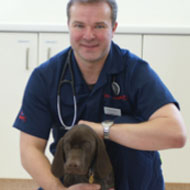
Tobias counselled the audience to be aware of emotional highs when they have successes and lows when cases go badly.
Veterinary surgeon Tobias Grave talked his audience through some of the ways to make being on call and dealing with out of hours emergencies a little less stressful for the veterinary surgeon.
He discussed how the caseload could be much less predictable and often urgent. Time management can also be an issue if a number of cases come in at the same time and there is only one vet. And of course, the clients are usually more anxious than in a normal consultation.
Tobias counselled the audience to be aware of emotional highs when they have successes and lows when cases go badly. He also talked about how the work can suddenly switch from calm to fast to hectic. In these circumstances, clients are often very stressed and difficult to deal with. Inevitably, there is always the issue of complaints on the horizon, especially when this type of work attracts high costs.
Stressed clients can be difficult to deal with and Tobias suggested the vet try to take a paradigm shift - so instead of thinking, ‘I’m here to help the animal’, think ‘I’m here to help people with their animals’.
Vets also have to accept that 'emergency' can mean a number of things to different people and to take the attitude that, an emergency should be seen as a time when the owner feels their pet needs immediate attention.
Emergency clients have reduced communication abilities causing difficultly in describing incidences, views and in understanding the information they have been given. It is interesting to consider that emergency vets probably have far more direct contact with clients than during a normal consultation, and so do need to be good with people.
Tobias told the audience that vets should be ready to do emergency work as soon as they have qualified. He said that experience comes with exposure not age, that sometimes too much experience may not be such a good thing and that one's mindset is of real importance.
Although there is lots of training and CPD available, he emphasised the importance of reflection at the end of every on call shift and the need to have some down time to recover.
He advised practices if they could, to have a dedicated area for emergency work and if that was not possible, have a mobile crash cart accessible at all times.
In an ideal world, vets on night duty would benefit from having half a day rest before their night duty, he said, but in reality, and judging by the response from the audience, this is rare.


 Defra has published guidance for the vet sector ahead of a proposed UK-EU Sanitary and Phytosanitary agreement.



