


Songbird migration impacted by pesticides, study finds
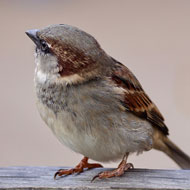
Imidacloprid and chlorpyrifos are widely used in North America, but their impact on bird migration had not previously been studied.
Commonly used insecticides can cause significant weight loss and migration problems in songbirds, research has shown for the first time.
Previously, research on neonicotinoids has focused on their impact on bees. However, scientists from the University of Saskatchewan in Canada found that the neonicotinoid, imidacloprid, and the organophosphate, chlorpyrifos, are having a “strong impact” on songbirds.
Their research has been published in the journal Scientific Reports.
During a spring migration, the research team captured sparrows and fed them daily for three days on a low or high dose of imidacloprid or chlorpyrifos. Lab experiments showed that the neonicotinoids changed the birds’ migratory orientation. Birds also lost up to 25 per cent of their fat stores and body mass.
“What surprised us was how sensitive and rapid the effects were, particularly to imidacloprid,” said Christy Morrissey, a biology professor at the University of Saskatchewan. “The birds showed a significant loss of body mass and signs of acute poisoning (lethargy and loss of appetite).
“The migration trials also showed that birds completely failed to orient or changed their northward direction.”
Post-doctoral researcher Margaret Eng added: “Effects were seen from eating the equivalent of just three to four imidacloprid-treated canola seeds or eight chlorpyrifos granules a day for three days.”
Small migratory songbirds often stop off on agricultural land and eat seeds to refuel for their long flight. They also mistakenly eat chlorpyrifos pellets for grit, which they usually eat to help with seed digestion.
Imidacloprid and chlorpyrifos are widely used in North America, but their impact on bird migration had not previously been studied. Whilst in the past, farmers may have sprayed their fields with the insecticides, they now have access to seeds that, in many cases, are already coated with neonicotinoids.
Whilst most of the birds survived and recovered followed the end of dosing, Eng said: “…the effects we saw were severe enough that the birds would likely experience migratory delays or changes in their flight routes that could reduce their chance of survival, or cause a missed breeding opportunity.”
Researchers believe the findings could have “major implications” for the regulation of these pesticides. The federal government is expected to make a decision on the use of imidacloprid in Canada in December.


 Eligible members of BEVA will be able to vote for their Council team until Monday, 17 August 2026. Members will have received an election email on 17 July.



