


Combination of low heart rate and hard exercise ‘costly’, researchers say
Researchers that fitted heart monitors to narwhals have discovered how they respond to stress.
The study revealed that when narwhals are frightened, they swim hard to escape. But at the same time, their heart rate will also drop to just three or four beats per minute.
This combination of hard exercise and a low heart rate while not breathing underwater is costly, the researchers conclude. It could make it hard for the deep-diving whales to get enough oxygen to the brain.
The findings are published in the journal Science.
"How do you run away while holding your breath? These are deep-diving marine mammals, but we were not seeing normal dives during the escape period. I have to wonder how narwhals protect their brains and maintain oxygenation in this situation," said lead researcher professor Terrie Williams, from the University of California, Santa Cruz.
Known as the 'unicorns of the sea', narwhals reside in the Arctic ocean and have historically lived undisturbed by humans. In recent years, however, melting sea ice has made the area more accessible to shipping, oil exploration and other human activities.
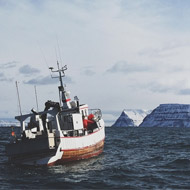
In the study, researchers worked with native hunters to find narwhals trapped in nets. When the narwhals were released, the researchers deployed a submersible device to measure their heart rate.
The instruments had been used by the researchers in previous studies to assess the physiology and dive responses in bottlenose dolphins, Weddel seals, and other species.
"This was our first opportunity to put the tags on a deep-diving whale to monitor its physiological and behavioural response,” said Williams. "It all began with the work on dolphins in our facilities at Long Marine Laboratory."
Williams’ earlier studies revealed a surprising frequency of heart arrhythmias in dolphins and seals during intense exercise at depth. The new findings add to her concerns about the effects of disturbances that cause an escape response in deep-diving marine mammals.
"Unlike threats from predators like killer whales, noise from sonar or a seismic explosion is difficult to escape. Problems can start if the whales try to outrun it," she said. "The implications of this study are cautionary, showing that the biology of these animals makes them especially vulnerable to disturbance.”
She continues: “This technology has given us a window into the narwhal's world, and what we see is alarming. The question is, what are we as humans going to do about it?"


 Eligible members of BEVA will be able to vote for their Council team until Monday, 17 August 2026. Members will have received an election email on 17 July.



