


‘Diverse range’ of ticks entered the UK in the past 10 years
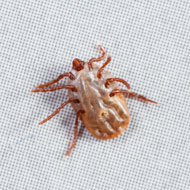
The majority of records (46.2 per cent) were Rhipicephalus sanguineus, which is a vector for canine babesiosis and ehrlichiosis.
A wide range of tick species entered the UK via travelled or imported animals over the past decade, according to data from Public Health England’s Tick Surveillance Scheme.
Ticks are submitted to the scheme for identification and parasitologists said there has been a steady increase in the number of records received each year. The majority are received in April and May.
From May 2005 to September 2006, the TSS identified 65 records comprising 399 ticks from animals with a recent history of overseas travel, according to a research paper published in Vet Record.
Over 90 per cent of records (364 ticks) were associated with dogs that had recently travelled abroad. Other hosts included a cat from Romania (three Ixodes ricinus ticks), a horse from Portugal (one Hyalomma marginatum) and a marine toad from Surinam (one Amblyomma rotundatum).
The majority of records (46.2 per cent) were Rhipicephalus sanguineus, which is a vector for canine babesiosis and ehrlichiosis, as well as Mediterranean spotted fever in people. While experts say the tick is unlikely to survive in the current UK climate, it can survive and establish populations inside homes containing dogs, putting residents at risk from potential disease transmission.
Ixodes ricinus accounted for 33.8 per cent of records.
Other species identified were Dermacentor reticulatus, Dermacentor variabilis, Haemaphysalis elliptica, Hyalomma lusitanicum, Ixodes hexagonus and Ixodes canisuga.
Forty-one confirmed tick importations were recorded from 15 different countries across the globe. Twenty possible importation events were recorded from a further eight countries in Europe.
Parasitologists detected both native and non-native tick species from animals entering the UK after overseas travel. Researchers wrote in Vet Record: ‘Each importation event provides an opportunity for the introduction and potential establishment of novel pathogens or ticks in the UK.’
Vets play an important role in raising awareness of ticks and tick-borne disease, they added. Continued surveillance and screening of imported ticks for pathogens of significance is important to improve our understanding of the risks in the UK.
Contact tick@phe.gov.uk for more information on submitting ticks.


 Defra has published guidance for the vet sector ahead of a proposed UK-EU Sanitary and Phytosanitary agreement.



