


Hong Kong votes to close its ivory trade
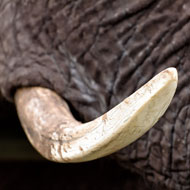
Poaching has driven a 62 per cent fall in elephant numbers over the past decade and up to 30,000 are killed each year to meet the demand for ivory.
Hong Kong is set to shut down its ivory trade by 2021 and increase the maximum penalty for wildlife crime to 10 years in jail. The move follows a vote by the Legislative Council yesterday (31 January).
The city is currently a major transit hub for the illegal wildlife trade, owing to low fines and sentences for traffickers.
Under the new law, the import and re-export of ‘pre-convention’ ivory will be banned by July 2018, while the sale of all post-1925 ivory will be prohibited by December 2021. Ivory traders will not be compensated for the stocks they hold.
The decision comes after a huge public campaign, which saw hundreds demonstrating in the city and a global petition with over a million signatures. Hong Kong follows in the footsteps of China, which shut its ivory market at the end of last year.
Global advocacy group Avaaz welcomed the ban as ‘a lifeline for elephants’. Poaching has driven a 62 per cent fall in elephant numbers over the past decade and up to 30,000 are killed each year to meet the demand for ivory. According to experts, the species could go extinct within our lifetime if this trend continues.
WWF warned that China’s ivory ban could intensify Hong Kong’s position as a preferred market for illegal ivory, under the cover of remaining legal traders. Closing the city’s ivory market will help to blunt this trend, but there is evidence that domestic ivory markets in Vietnam, Cambodia, Lao PDR, Japan and Myanmar are catering increasingly to visitors from China.
“This is the time to increase rather than to relax our efforts,” said Gavin Edwards, WWF conservation director. “With stronger sentences in Hong Kong, law enforcement should take a greater role in joint efforts to investigate and prosecute criminal wildlife syndicates. WWF calls on governments across Asia to follow China and Hong Kong’s lead and close their ivory markets.”
Domestic ivory market closures have already been implemented by the USA, China and many African countries. Campaigners are now calling on the UK and the EU to take similar action.
Born Free CEO Will Travers commented: “The UK, and particularly the EU, are falling behind the international trend, and now constitute the world’s largest sources of ‘legal ivory’. Both the European Commission and the UK Government have conducted recent public consultations on the future of their domestic ivory trade.
“We believe the overwhelming public mood is to achieve a total ban without delay and we urge the UK and EU to act quickly and decisively to introduce comprehensive ivory trade and export bans.”


 Eligible members of BEVA will be able to vote for their Council team until Monday, 17 August 2026. Members will have received an election email on 17 July.



