


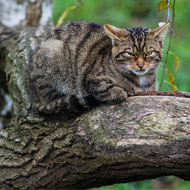
Conservationists fight to protect habitat being cleared for wind farm
A petition calling to save an area of forest in Aberdeen, identified as the last stronghold for Scottish wildcats, has received almost 200,000 signatures.
The petition was launched by conservationist group Wildcat Haven after surveys showed Forestry Commission Scotland (FCS) were illegally clear-felling wildcat territories for timber. A FCS email obtained by Wildcat Haven under the Freedom of Information Act also revealed plans for two wind farms.
Kev Bell, a Wildcat Haven field conservationist studying the wildcats, commented: “If this goes ahead it's game over for the wildcat, the wind farm will wipe out numerous territories, split the rest of the population in half and displace many of them onto grouse moors and roads. And there's another wind farm planned we don't know the details of yet.
“Everyone knows the wildcats are there; we've shown them evidence, Scottish National Heritage have their own teams in the area who have also documented the cats, but still the logging goes on, still they're discussing industrial scale exploitation of this last stronghold. We have to protect this forest, we have to; it belongs to the people and 200,000 of them have already made it clear they agree with that.”
Steve Piper, a wildlife filmmaker and expert wildcat conservationist who started the petition, also commented: “It's appalling that the Forestry Commission, backed up by the Scottish Natural Heritage Scottish Wildcat Action project, are clear-felling the only known wildcat stronghold for wood pulp and claiming it's good for the wildcats anyway, but it's shameful they're even considering a wind farm that would wipe out a quarter of this unique forest.
“The Highlands is full of bare hills so why do we need another wind farm on the only one with a resident wildcat population?"
Native to Scotland, the Scottish wildcat is one of the world's rarest creatures. There are currently only 35 remianing in the wild, a third of which live in the Clashindarroch Forest.
WIldcat Haven have found 13 wildcats in this forest. However, logging is taking place during kitten season, disturbing wildcat mothers, which could make them abandon and even eat their young.
Image (C) Peter Trimming


 Eligible members of BEVA will be able to vote for their Council team until Monday, 17 August 2026. Members will have received an election email on 17 July.



