


Animals to be banned from Welsh circuses
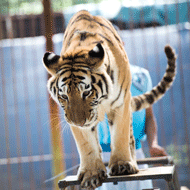
45 countries across the globe have introduced bans on animals in circuses.
The Welsh government is to introduce a ban on the use of wild animals in travelling circuses.
In a statement, a spokesperson for the government said: “The way animals are treated is an important reflection of society and over the next 12 months, a bill will be introduced to ban the use of wild animals in travelling circuses on welfare grounds”.
Jan Creamer of Animal Defenders International (ADI), which has documented suffering and use in UK circuses for many years, welcomed the move.
“We congratulate the Welsh Government for taking a stand to stop circus suffering in Wales and bringing a UK-wide ban one step closer,” she said. “Knowing that only a ban can protect them, we are delighted an end to the use of wild animals in circuses in Wales is finally within sight.”
The Bill has taken a long time to come to fruition, given that the Welsh government first committed to a ban on wild animals in circuses in 2013. In February this year, the UK government pledged to introduce a UK-wide ban by January 2020.
To date, 45 countries across the globe have introduced bans on animals in circuses, including Scotland and Ireland. Currently, there are only two circuses in England that carry wild animals and are licensed to tour in Wales - Circus Mondao and Peter Jolly’s Circus.
A third circus with big cats, owned by Thomas Chipperfield, also performed in Wales when it was unable to obtain a license in England. Since then it has remained off the road, but ADI has revealed the miserable lives suffered by its cats, which live in restricted cages and have limited outside access.
ADI also found evidence of overcrowding, fighting between animals and a worker tormenting a camel.


 Eligible members of BEVA will be able to vote for their Council team until Monday, 17 August 2026. Members will have received an election email on 17 July.



