


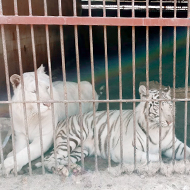
Petition calls for EU ban on commercial trade to protect tigers
Conservationists are urging the EU to ban all commercial trade in tigers and tiger parts, after recent police operations found the trade is not only an issue in Asia, but also Central Europe.
Police and customs officials in the Czech Republic raided properties in Prague and central and northern Bohemia, on suspicion of illegally killing tigers and possessing tiger products.
A recently killed tiger was seized at one of the properties, where a suspect was processing tiger bones and other tiger products. The suspects shot the tigers in the eyes to avoid damaging the skin and those killed were used to make tiger broth.
Czech authorities also found tiger meat and products on sale at the Vietnamese market, Sapa, in Prague.
According to international animal charity FOUR PAWS, one of the raided facilities was owned by circus leader Ludvik Berousek. Research by the charity in June shows a meeting in which Mr Berousek revealed his tiger breeding facility in Prague and discussed the sale of tigers to Asia.
In the 20th century, tiger populations declined by more than 90 per cent around the world. There are thought to be just 3,900 left in the wild today. Much of this is driven by demand for tigers to be displayed commercially and traded for their body parts, for use in traditional Asian medicines.
Under current legislation, tigers born in captivity in Europe can be traded for commercial purposes, such as circuses, photo opportunities or private keeping.
FOUR PAWS has launched a petition urging the European Commission to ban the commercial trade in tigers.
Kieran Harkin, head of wildlife campaigns, said: “It is shocking how the EU does so much to combat the trade in wildlife in other parts of the world, but we have turned a blind eye to protecting an endangered species on our own doorstep…
“The EU should take a leading role in protecting these endangered species and ban all commercial trade ensuring tiger traders and businesses have no place in the EU."
Image © FOUR PAWS


 Eligible members of BEVA will be able to vote for their Council team until Monday, 17 August 2026. Members will have received an election email on 17 July.



