


New treatment for recurring malaria approved
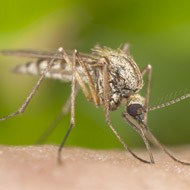
P.vivax malaria is found mainly in the US, Latin America and some parts of Africa.
A new vaccine for the treatment of recurring malaria has been approved by the United States Food and Drug Administration.
A press release issued by GlaxoSmithKline (GSK) and Medicines for Malaria Venture (MMV) said that single-dose Krintafel (tafenoquine) will be the first to prevent against a relapse of P. vivax malaria.
“Today’s approval of Krintafel, the first new treatment for Plasmodium vivax malaria in over 60 years, is a significant milestone for people living with this type of relapsing malaria,” explained Dr Hal Barron, GSK chief scientific officer and president of research and development.
“Together with our partner, Medicines for Malaria Venture, we believe Krintafel will be an important medicine for patients with malaria and contribute to the ongoing effort to eradicate this disease.”
MMV chief executive officer Dr David Reddy hailed the US FDA’s approval of Krintafel as a ‘major milestone’ and a ‘significant contribution’ towards the global eradication of malaria.
“The world has waited decades for a new medicine to counter P. vivax malaria relapse,” he said. “Today, we can say the wait is over. Moreover, as the first ever single-dose for this indication, Krintafel will help improve patient compliance.
“We are proud to have worked side-by-side with GSK for more than a decade to reach this point. Our focus is now on working to ensure the medicine reaches the vulnerable patients that need it most.”
The most frequent and widely distributed causes of recurring malaria, p.vivax is one of the six species of parasite that commonly infects humans. Found mainly in the US, Latin America and some parts of Africa, it can lay dormant in the liver for several months or years after the infecting bite.


 Defra has published guidance for the vet sector ahead of a proposed UK-EU Sanitary and Phytosanitary agreement.



