


Quarter of hen harrier chicks vanished in ‘suspicious circumstances’
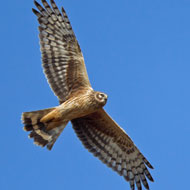
Scotland has seen a 57 per cent decline on grouse moors since 2010.
Over a quarter of hen harrier chicks disappeared in suspicious circumstances last year, according to data from satellite-tagged birds.
The RSPB said tags on some birds suddenly stopped transmitting, despite working perfectly beforehand. One bird’s tag abruptly stopped transmitting over a grouse moor near Ballater on 12 August last year, while another pair of birds disappeared over grouse moors in northern England.
Meanwhile, almost 40 per cent of the birds tagged in 2017 are known to have died from natural causes. Tags continue to transmit after the birds are dead, so the remains can often be recovered and post mortems carried out. The data shows some birds had died from predation, while others had starved.
Birds are tagged as part of the EU-funded Hen Harrier LIFE project, which is now in its fourth year. This year, the RSPB has so far tagged 30 birds - an unprecedented number. The tags allow conservationists to gather valuable information on the birds’ movements and cause of death.
Hen harrier chicks have a survival rate of just 22 per cent in the first two years of life and the species has declined by 24 per cent in the UK since 2004. Scotland has seen a 57 per cent decline on grouse moors since 2010. Conservationists say illegal persecution is having a hugely detrimental impact on hen harrier numbers.
Dr Cathleen Thomas, project manager for the LIFE project, said: “This species is only just holding on in the UK; it’s both heart-breaking and infuriating that year after year many of these chicks disappear in suspicious circumstances. The loss of birds in this way is both needless and senseless and cannot go on.”
An independent enquiry is currently underway, having been commissioned by Scottish cabinet secretary Roseanna Cunningham to find out how grouse moors can be managed within the law and explore options for its regulation. The panel is expected to report back in spring 2019.


 Eligible members of BEVA will be able to vote for their Council team until Monday, 17 August 2026. Members will have received an election email on 17 July.



