


Mass whale stranding due to environmental factors
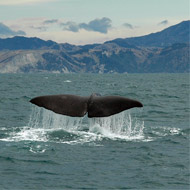
Teams of scientists from across Europe examined 27 of the stranded sperm whales.
A mass mortality event of sperm whales in 2016 was most likely due to a combination of several complex environmental factors, researchers have concluded.
In early 2016, 30 sperm whales became stranded across five countries over a period of six weeks. The whales had entered the North Sea - a known hotspot for strandings as water becomes progressively shallower.
In the study, teams of scientists from across Europe examined 27 of the stranded sperm whales. The animals were all young, subadult males between the ages of 10 and 16 years old. Dietary analysis showed they had likely foraged for the last time in Norwegian waters, at least 1300 kilometres away.
Writing the journal PLOS One, lead author Lonneke IJsseldijk from Utrecht University said: “We found no evidence of manmade trauma nor was there evidence of significant levels of chemical pollution.
“In nine examined whales, marine debris (plastic) was also found, but had not caused obstructions of the gastrointestinal tract or starvation and were deemed to be of secondary importance. Marine earthquakes, harmful algal blooms and changes in sea surface temperature were also considered as possible drivers of the series of strandings but were ruled out.”
Scientists still do not know why the whales entered the North Sea because there is a lack of information about what time they swam into the region. They typically inhabit much deeper waters and the North Sea is a highly unusual area for them.
Furthermore, the sperm whales’ main prey - Boreoatlantic armhole squid - does not live in the North Sea, meaning they were unable to feed in this region. Researchers say the North Sea can, therefore, be considered to act as an effective trap for sperm whales, and once they enter the area they are at significant risk of stranding and death.
“Although it was impossible to conclusively establish a reason for the animal’s entry into the North Sea region, we’ve still been able to learn a significant amount from this study, one of the most extensive investigations of a sperm whale mortality event that has taken place,” continued IJsseldijk.
“This work also highlights the importance of multidisciplinary and collaborative investigations when dealing with transboundary events such as this one.”


 Eligible members of BEVA will be able to vote for their Council team until Monday, 17 August 2026. Members will have received an election email on 17 July.



