
Your data on MRCVSonline
The nature of the services provided by Vision Media means that we might obtain certain information about you.
Please read our Data Protection and Privacy Policy for details.

In addition, (with your consent) some parts of our website may store a 'cookie' in your browser for the purposes of
functionality or performance monitoring.
Click here to manage your settings.
If you would like to forward this story on to a friend, simply fill in the form below and click send.

Your friend's email:
Your email:
Your name:
 
 
Send Cancel

Rare blood disorder reported in cat for the first time
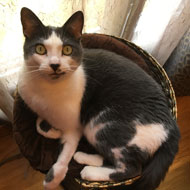
Miao Miao was taken to UC Davis with persistent nosebleeds.

Four-year-old cat diagnosed with Glanzmann thrombasthenia

A rare congenital blood disorder has been reported in a cat for the first time, according to vets at the University of California Davis.

Critical care specialist Dr Ronald Li used state-of-the-art testing to diagnose Glanzmann thrombasthenia (GT) in four-year-old cat Miao Miao, after he was brought to UC Davis with persistent nosebleeds.

Based on previous medical issues, the cat’s owners knew he had some variation of a blood platelet disorder, causing problems with blood clotting.

Initial testing found he was not anaemic, had no evidence of inflammation, had a normal platelet count and was not bleeding into any of his other bodily cavities. But Dr Li found GT was causing Miao Miao’s platelets to be non-functional and lack expression of a protein called integrin.

In humans and dogs, GT is caused by a mutation in the genes responsible for making the protein that is essential for clot formation. Miao Miao’s DNA is currently being tested to characterise his genetic mutations. Dr Li hopes to identify the mutation so that cats can be tested in future.

There is currently no standard protocol for treatment, as Miao Miao is the first cat ever to be diagnosed with GT. UC Davis said the condition will likely put him at risk of spontaneous bleeding for the rest of his life.

Miao Miao is currently undergoing a method of treatment called Yunnan Baiyao - a Chinese herbal formula which has anti-hemorrhagic effects. His owners report that it appears to be effective in treating the bleeding.

Image courtesy of UC Davis

 

Become a member or log in to add this story to your CPD history

Equine Disease Surveillance report released for Q4 2025

News Story 1
 The latest Equine Disease Surveillance report has been released, with details on equine disease from Q4 of 2025.

The report, produced by Equine Infectious Disease Surveillance, includes advice on rule changes for equine influenza vaccination.

Statistics and maps detail recent outbreaks of equine herpes virus, equine influenza, equine strangles and equine grass sickness. A series of laboratory reports provides data on virology, bacteriology, parasitology and toxicosis.

This issue also features a case study of orthoflavivus-associated neurological disease in a horse in the UK. 

Click here for more...
News Shorts
RCVS annual renewal fee for vets due

RCVS' annual renewal fee for veterinary surgeons is now due. Vets must pay their renewal fee before Wednesday, 1 April 2026.

This year's standard annual fee has increased to 431 from last year's 418. This is an approximately three per cent increase, as approved by RCVS Council and the Privy Council.

Tshidi Gardner, RCVS treasurer, said: "The small fee increase will be used to help deliver both our everyday activities and our new ambitious Strategic Plan, which includes aims such as achieving new legislation, reviewing the Codes of Professional Conduct and supporting guidance, and continuing to support the professions through activities such as the Mind Matters Initiative, RCVS Academy and career development."

A full breakdown of the new fees is on the RCVS website. Information about tax relief is available on the UK government website.


