
Your data on MRCVSonline
The nature of the services provided by Vision Media means that we might obtain certain information about you.
Please read our Data Protection and Privacy Policy for details.

In addition, (with your consent) some parts of our website may store a 'cookie' in your browser for the purposes of
functionality or performance monitoring.
Click here to manage your settings.
If you would like to forward this story on to a friend, simply fill in the form below and click send.

Your friend's email:
Your email:
Your name:
 
 
Send Cancel

Ivory bill becomes UK law
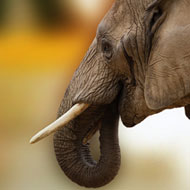
Approximately 20,000 elephants are poached every year for ivory.
New bill bans the commercial use of ivory in the UK

A ban on ivory sales has become UK law in the Ivory Act 2018. It is predicted to come into force in late 2019.

Introduced in May 2018, the bill has passed parliamentary processes with support across the house.

Approximately 20,000 elephants are poached every year for ivory and the elephant population has dropped by nearly a third in the last 10 years.

Wildlife charity Born Free has welcomed the bill and calls it “a vindication of Born Free’s long-standing assertion that only by banning the trade in ivory can we hope to bring an end to the poaching of elephants, who are being slaughtered on an industrial scale to provide the market with tokens and trinkets”.

The Act will:
  • submit a total ban on dealing in ivory, irrespective of its age, within the UK. This will include imports and exports to and from the UK
  • introduce a new compliance system in which current owners of ivory can continue to trade in exempt items. Such allowances include musical instruments made before 1975 with an ivory content of less than 20%, and sales to accredited museums.
  • implement tough new penalties for anyone found guilty of disobeying the law.

Environment secretary, Michael Gove, commented:

“It is an extraordinary achievement to have passed this Act of Parliament. The Ivory Act is a landmark in our fight to protect wildlife and the environment. The speed of its passage through Parliament shows the strength of feeling on all sides of the House on this critical issue.”


Become a member or log in to add this story to your CPD history

Equine Disease Surveillance report released for Q4 2025

News Story 1
 The latest Equine Disease Surveillance report has been released, with details on equine disease from Q4 of 2025.

The report, produced by Equine Infectious Disease Surveillance, includes advice on rule changes for equine influenza vaccination.

Statistics and maps detail recent outbreaks of equine herpes virus, equine influenza, equine strangles and equine grass sickness. A series of laboratory reports provides data on virology, bacteriology, parasitology and toxicosis.

This issue also features a case study of orthoflavivus-associated neurological disease in a horse in the UK. 

Click here for more...
News Shorts
RCVS annual renewal fee for vets due

RCVS' annual renewal fee for veterinary surgeons is now due. Vets must pay their renewal fee before Wednesday, 1 April 2026.

This year's standard annual fee has increased to 431 from last year's 418. This is an approximately three per cent increase, as approved by RCVS Council and the Privy Council.

Tshidi Gardner, RCVS treasurer, said: "The small fee increase will be used to help deliver both our everyday activities and our new ambitious Strategic Plan, which includes aims such as achieving new legislation, reviewing the Codes of Professional Conduct and supporting guidance, and continuing to support the professions through activities such as the Mind Matters Initiative, RCVS Academy and career development."

A full breakdown of the new fees is on the RCVS website. Information about tax relief is available on the UK government website.

