


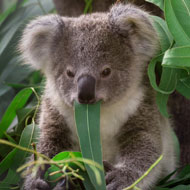
Report proposes actions to slow and reverse the species’ decline
The conservation status of koalas in Australia should be upgraded from “vulnerable” to “endangered” to protect vital habitats, according to a new report.
The Koala Habitat Conservation Plan is the first strategy to have been produced independently of government or political influence.
Prepared for WWF Australia and leading conservation organisations by ecologist David Paull, it proposes several legislative reforms and conservation actions to slow and reverse the species' decline in Queensland and New South Wales (NSW).
‘The main driver of the loss and fragmentation of koala habitat are the weak and permissive laws passed by state, federal and local governments which allow excessive tree clearing and deforestation,’ the report notes. ‘Without the right species of eucalyptus and other trees, koalas have no homes or food.’
At least 9.6 million hectares of koala habitat was destroyed in Queensland and New South Wales between 1990 and 2016.
The report states that laws and policies which regulate habitat removal in NSW and Queensland ‘require urgent and significant strengthening in order to protect koala habitat.’ It also calls on the Australian Governments to make saving the koala from extinction in the wild in Eastern Australia ‘a national priority.’
Ongoing land clearing, native forest logging, urbanisation and the onset of climate change are some of the major threats to existing koala populations.
The report notes that the situation has been made worse by poor regulatory control over vegetation removal, poor environmental planning and increased levels of disease, dog attacks and vehicle strikes.
‘Given that koala populations continue to decline to historic lows, koala populations in NSW and Queensland would likely qualify for ‘upgrading’ the current ‘vulnerable’ listing to ‘endangered,’ Paull said.


 Eligible members of BEVA will be able to vote for their Council team until Monday, 17 August 2026. Members will have received an election email on 17 July.



