


‘Welcome recovery’ follows mass die-offs
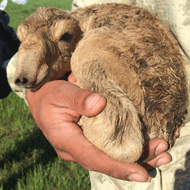
New figures suggest Central Asia’s population of critically endangered Saiga antelope has doubled since 2015, when the species suffered a mass die-off.
An international group dedicated to conserving the species presented their latest findings at a meeting in Germany on 1-4 April. The population now numbers 228,000, compared to around 103,000 in 2015.
Haemorrhagic septicaemia, caused by the bacterium Pasteurella multocida, was found to be responsible for the deaths of more than 200,000 Saiga in Kazakhstan in 2015. Research suggests the deaths were ultimately linked to unusual climate conditions, causing warm, humid spring weather. The Mongolian population of Saiga later suffered an 80 per cent decline in 2017 due to the newly emerging viral disease peste des petits ruminants (PPR).
Recent improvements in population numbers are down to joint efforts of countries and organisations that signed a memorandum of understanding (MOU) to protect the species.
However, Professor Richard Kock, of the Royal Veterinary College, warned that this welcome recovery “could be short-lived” due to rapidly changing environmental conditions, which affect climate and Saiga habitat.
“Our work is vital to understanding the causes for death and possible mitigation that society can plan for this unique animal,” he added.
At the recent meeting in Germany, MOU stakeholders introduced a new plan, covering 2021-2025, which prioritises future actions for Saiga conservation, including measures relating to disease, sustainable trade, local awareness, habitat protection, monitoring, anti-poaching work and captive breeding.
The plan will be submitted for adoption at the fourth meeting of MOU members in Russia, 2020.
Image © RVC


 Eligible members of BEVA will be able to vote for their Council team until Monday, 17 August 2026. Members will have received an election email on 17 July.



