


Octopus arms make decisions independently of the brain - study
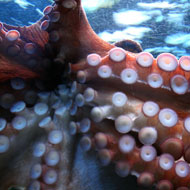
The model depicts information flow between the animal's suckers, arms and brains.
Researchers studying the behaviour and neuroscience of octopuses have demonstrated, for the first time, how octopus arms may be able to make decisions independently of the brain.
A new model, created by the University of Washington, depicts information flow between the animal’s suckers, arms and brain.
Scientists say the model supports previous findings that octopus’ suckers initiate action in response to information their obtain from their surroundings, coordinating with neighbouring suckers along the arm. The arms then process sensory and motor information, and muster collective action in the peripheral nervous system, without waiting on commands from the brain.
Dominic Sivitilli, a graduate student in behavioural neuroscience and astrobiology at the University of Washington in Seattle, said the result is an arm-up decision mechanism rather than the brain-down mechanism that is typical of humans.
In the study, Sivitilli and his colleagues gave the octopuses interesting, new objects to investigate, such as textured rocks, Lego and elaborate mazes with food inside. They then looked for patterns that revealed how the octopus' nervous system delegates among the arms as the octopus approaches a task or reacts to new stimuli.
The scientists observed the octopus exploring the objects in its tank and looking for food using a camera and a computer program. The program quantified movements of the arms, tracking how the arms work together in synchrony, suggesting direction from the brain, or asynchronously, independent decision-making in each arm.
David Gire, a neuroscientist at the University of Washington and Sivitilli's advisor for the project said: “You're seeing a lot of little decisions being made by these distributed ganglia, just by watching the arm move, so one of the first things we're doing is trying to break down what that movement actually looks like, from a computational perspective.
"What we're looking at, more than what's been looked at in the past, is how sensory information is being integrated in this network while the animal is making complicated decisions."


 Eligible members of BEVA will be able to vote for their Council team until Monday, 17 August 2026. Members will have received an election email on 17 July.



