


Scientists call for urgent action to combat over-exploitation
A list of the world’s top 20 shark and ray catchers, who collectively account for around 80 per cent of the average global catch, have been revealed in a new report.
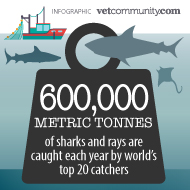
Compiled by the wildlife trade monitoring network, TRAFFIC, the report shows that some 600,000 metric tonnes of sharks and rays were caught each year between 2007 and 2017.
Topping the list of catchers during this period were Indonesia, Spain, India, Mexico and the United States, with a combined total of 333,952 metric tonnes (mt) caught on average each year.
Shark fin consumption in East Asia is also a key driver of trade. An average of 16,177 mt per year of shark fin products (with an average value of USD294 million per year) were reported as imported worldwide during 2000–2016.
Report co-author Nicola Okes called for urgent action to combat the over-exploitation and lack of accurate catch and trade information on sharks and rays.
“As key high order predators, the continued wellbeing of these populations is essential to the overall health of our oceans. We need the main catchers to take responsibility and put in place monitoring and management measures to stop further declines of sharks and rays.”
The report follows the successful listing of longfin and shortfin mako sharks in the CITES1 Appendix II at the 18th Conference of the Parties held in Geneva last month. The Proposals were accepted in response to population declines, made worse by over-exploitation and unsustainable trade.
Several species protected under CITES regulations are assessed in the report, including silky shark, mobulid rays, and blue shark. In 2017 alone, more than 103,528 mt of blue shark were reported as caught.
“We have seen a greater use of trade controls through CITES over the last decade as a response to declines in sharks and rays being overfished for trade,” said Glenn Sant, TRAFFIC’s senior advisor on fisheries, trade and traceability.
“We would also like to see major importers scrutinising the sustainability of the shark and ray products they import using tools such as M-Risk, developed by TRAFFIC. Major importers need to take responsibility for their sustainability footprint as a result of importing products from species at high risk of overexploitation”.


 Eligible members of BEVA will be able to vote for their Council team until Monday, 17 August 2026. Members will have received an election email on 17 July.



