


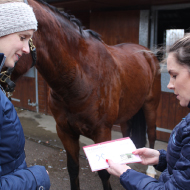
Scheme designed to spark positive discussions with owners
A pilot scheme that uses a colour-code system of vaccination reminders has been launched by the British Equine Veterinary Association (BEVA) in a bid to tackle equine obesity.
The scheme utilises a traffic light system in the form of reminder stickers, which vets can place on the front of passports at each vaccination appointment. If the scheme proves a success, it will be rolled out in the summer to the whole of the UK.
Despite the best efforts of vets to address the issue, obesity is one of the biggest problems facing equine welfare in the UK. Many owners are either not recognising obesity in their horses, or are subsequently not being motivated to take action.
To help tackle this problem, BEVA harnessed knowledge gained from the government-owned Behavioural Insights Team on how best to positively engage with horse owners. They came up with a simple, practical scheme that utilises the routine annual or six-monthly vaccination visit to assess a horse’s body condition.
The sticker scheme is designed to remind horse owners when the next vaccination is due and to provide information about their animal’s weight. A ‘healthy’ body condition is indicated by a green sticker. Amber indicates the horse is carrying too much fat tissue and needs moderate changes to its lifestyle. Red shows the horse is carrying excessive amounts of weight which is putting the horse in morbid danger.
The idea of the scheme is to spark a discussion with the owner about their horse’s weight and how any potential issues can be addressed. If time does not allow for a full discussion, the owner can simply scan the sticker with a smartphone to access information on the matter in their own time.
“The first challenge is helping owners recognise when their horse is overweight. Once this has been established then we can make a plan to correct the problem as a team,” explains Lucy Grieve, president-elect of BEVA and part of the association’s obesity campaign working group.
“The owner needs to be on board and committed in order to carry out the tough task of reducing the weight of their horse. We hope that owners will be ‘nudged’ by the sticker intervention to consider the information they have been offered and start to tackle the problem before it causes life-threatening disease.”
Nine equine veterinary practices are taking part in the scheme, including Loch Leven Equine Practice in Kinross. Managing director Liz Somerville said:
“We have been focusing on equine obesity for the last couple of years including running a #FitnotFat campaign last year to try to highlight the growing obesity problem in our horses. Unfortunately, it sometimes feels that we are banging our heads against a brick wall so when BEVA came up with a new approach to try and get the message through to our owners it was too good an opportunity to miss.”
After six months, vets involved in the scheme will be asked how they felt it worked, what proportion of owners used the QR codes, and how many owners sought their advice after viewing the information online. Success will be measured by assessing whether the stickers resulted in more owners recognising their horse is overweight, not by the number of kilograms lost.
“Hopefully we’ll see some success from the pilot and using the feedback we receive we will then make changes as required before rolling the project out across the membership,” said Lucy.
Image (C) BEVA.


 Eligible members of BEVA will be able to vote for their Council team until Monday, 17 August 2026. Members will have received an election email on 17 July.



