


Wader protection project awarded funding boost
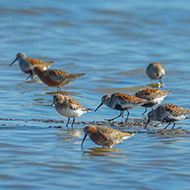
SAC Consulting and RSPB Scotland are working together to protect wading birds.
A project to expand farmland habitats for wading birds in Scotland has been awarded £90,000 in funding from Scottish Natural Heritage.
The money will be used to help protect waders and undertake monitoring to better understand how these threatened birds are faring across the Lanarkshire and Ayrshire uplands.
Wader bird species are in decline across the UK. Since 1994, curlew numbers in Scotland have fallen by about two thirds and lapwing populations by a half.
In a bid to protect them, SAC Consulting – a division of Scotland's Rural College – has teamed up with RSPB Scotland and a group of 17 South Lanarkshire and East Ayshire farmers. The parties are also working with the Soil Association Scotland-led Rural Innovation Support Service (RISS).
Project manager and RSPB senior conservation advisor Dan Brown said that agri-environment schemes, extensive farming systems and predator management were the most important reasons for the birds nesting in the area.
“Scotland is an important country for these species, and the agri-environment schemes have been a key delivery mechanism for their survival outside of nature reserves,” he said. “But their breeding success is still too low, so we need to understand and quantify what works, to better target the schemes and future management.”
The funding will enable the group to collect data on stocking rates, grazing techniques and soil characteristics and how they interact with bird nesting, hatching and causes of nest loss.
Farmers will also carry out soil sampling, invertebrate counts and compaction testing and will help the British Trust for Ornithology, part of the Working for Waders initiative, to refine their monitoring.


 Eligible members of BEVA will be able to vote for their Council team until Monday, 17 August 2026. Members will have received an election email on 17 July.



