


Rare sunfish washes up on Scottish beach
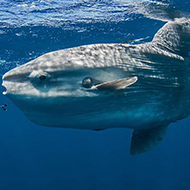
Sunfish are distinctive, bony fish that can weigh up to a tonne.
A strange-looking fish that can grow up to four metres in length has washed up on a beach in Scotland.
Experts from the Scottish Marine Animal Stranding Scheme (SMASS) were called out to the Moray Firth on Wednesday (23 September), where an ocean sunfish had washed up on Rosemarkie beach.
While sunfish are occasionally seen off the coast of the Hebrides, they are are a rare sight on Scotland's east coast.
“They are not uncommon visitors to the UK in the summer months, but most sightings have been off the Atlantic coast, so an animal apparently feeding well this far up the North Sea coast is quite unusual,” said Dr Andrew Brownlow, head of SMASS - part of Scotland's Rural College.
“Over the years SMASS has recorded a gradual increase of warm water species in more northern latitudes, probably driven by changes in prey distribution and a plausible indicator of a changing ocean climate.”
The distinctive sunfish is one of the heaviest bony fish in the world, growing to 3.3 metres in length and weighing up to a tonne. Listed as Vulnerable on the ICUN Red List, the species normally lives in water that is warmer than 10°C.
Dr Brownlow said there wasn’t an obvious reason for this particular stranding.
“There doesn’t appear to be obvious trauma, for example from bycatch in fishing gear, boat strike or even bottlenose dolphin attacks, so it may be it simply followed prey too close to the shore and was left by the falling tide,” he said.
The sunfish is being sent to the National Museums Scotland in Edinburgh where an investigation will seek to establish what it had been eating, check for any ingested marine debris and collect samples for genetics and stable isotope analysis.


 Eligible members of BEVA will be able to vote for their Council team until Monday, 17 August 2026. Members will have received an election email on 17 July.



