


Move welcomed by vets and animal welfare campaigners.
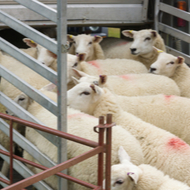
Long journeys for animals exported for slaughter could be banned under new Government proposals.
A new consultation from the Department for Environment, Food and Rural Affairs (Defra) will run for eight weeks seeking views on live animals export and how to better protect animal welfare during transport.
While the BVA is not calling for a complete ban on live animal exports, the organisation has welcomed the move, saying it has “long believed that animals should be slaughtered as close as possible to where they have been reared.” But the National Farmers Union (NFU) said that any change “could potentially have a massive impact on the UK food supply chain."
Environment Secretary George Eustice said: “We are committed to improving the welfare of animals at all stages of life. Today marks a major step forward in delivering on our manifesto commitment to end live exports for slaughter.
“Now that we have left the EU, we have an opportunity to end this unnecessary practice. We want to ensure that animals are spared stress prior to slaughter.”
According to Defra, some 6,400 animals were sent to the UK to continental Europe in 2018. It said that it had previously been unable to pursue a ban because of the EU trading rules on the movement of animals.
'Previously, EU rules prevented any changes to these journeys, but leaving the EU has enabled the UK Government to pursue these plans which would prevent unnecessary suffering of animals during transport and see us become the first country in Europe to end this practice,' Defra said.
The consultation will consider stricter rules on transporting animals in extreme temperatures, tighter rules for transporting live animals by sea, measures to cut the amount of time animals spend on the road, and plans to give animals more space and headroom.
BVA response
The move has received the backing of the BVA, whose policy on the welfare of livestock during transport, states that animals should be slaughtered as close to the point of production as possible.
BVA president, James Russell said: “BVA has long believed that animals should be slaughtered as close as possible to where they have been reared and not be exported to countries with unknown standards or standards that are below those in the UK. We welcome this consultation looking at all aspects of animal welfare at transport.
“Live animal transport is a complex issue which includes varying factors of welfare and needs of different species. It is important to recognise that journey length and time are not the only things which can affect welfare, and that an evidence-based approach to improvements is essential.
He continued: “We regularly engage with Government on measures to safeguard animal welfare during transport, and recently gave evidence to the Farm Animal Welfare Committee (FAWC), on the issue. We will be liaising with our species, specific divisions, and members to form a response to this consultation.”
NFU response
NFU livestock board chairman, Richard Findlay said the changes “could potentially have a massive impact on the UK food supply chain”.
Speaking to BBC News, he said: "The NFU has developed a solution to raise the standards for live exports for slaughter. We believe that an assurance scheme which goes beyond the current regulation would be best to ensure all animals travel in the best possible conditions and that they arrive at the approved and final destination in the best possible health.”
Compassion in World Farming and the RSPCA
Compassion in World Farming’s Chief Policy Advisor Peter Stevenson said the organisation was “delighted that Defra plans to ban live exports for slaughter and fattening. We have campaigned for over 50 years against the massive suffering caused by this inhumane, archaic trade, so this unambiguous proposal is very welcome.”
RSPCA CEO Chris Sherwood also welcomed the plans, adding that he looked “forward seeing this happen as the RSPCA has campaigned on this issue for more than 50 years.”


 Eligible members of BEVA will be able to vote for their Council team until Monday, 17 August 2026. Members will have received an election email on 17 July.



