
Your data on MRCVSonline
The nature of the services provided by Vision Media means that we might obtain certain information about you.
Please read our Data Protection and Privacy Policy for details.

In addition, (with your consent) some parts of our website may store a 'cookie' in your browser for the purposes of
functionality or performance monitoring.
Click here to manage your settings.
If you would like to forward this story on to a friend, simply fill in the form below and click send.

Your friend's email:
Your email:
Your name:
 
 
Send Cancel

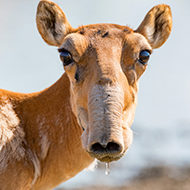
Comeback made by critically endangered antelope species
The saiga antelope is classified as critically endangered.

The saiga antelope population in Kazakhstan has risen to 842,000. 

The rare saiga antelope has made a comeback, as numbers have more than doubled since 2019, as reported by the BBC.

The saiga has reemerged in Kazakhstan, after a mass die-off in 2015 caused worry surrounding the future of the species, however, following conservation measures put in place by the Kazakh government, the species have begun their return from the brink of endangerment. 

Albert Salemgareyev, from the Association for the Conservation of Biodiversity of Kazakhstan, told BBC News that saigas can: “give birth to twins every year, which gives high potential for the species to quickly recover." This has been a key factor in their comeback, as this allows the species to grow at a fast rate, alongside the conservation measures, such as a poaching ban.

The most recent survey was carried out in April 2021, and displayed both a big increase in numbers generally, and particularly in Ustyurt in south Kazakhstan. 

As the BBC reports, Fauna and Flora International, a UK non-profit organisation, has been involved in efforts to protect the saiga in Ustyurt, putting together an anti-poaching ranger team and also monitoring Saiga movements using satellite collaring.

FFL senior programme manager for Central Asia, Favid Gill, told BBC News: There are few truly vast wildernesses, like the steppes of central Asia, left on the planet. To know that saiga herds are still traversing them in their thousands, as they have done since prehistoric times, is an encouraging thought for those of us who want those wildernesses to remain."


Image © Shutterstock

Become a member or log in to add this story to your CPD history

Equine Disease Surveillance report released for Q4 2025

News Story 1
 The latest Equine Disease Surveillance report has been released, with details on equine disease from Q4 of 2025.

The report, produced by Equine Infectious Disease Surveillance, includes advice on rule changes for equine influenza vaccination.

Statistics and maps detail recent outbreaks of equine herpes virus, equine influenza, equine strangles and equine grass sickness. A series of laboratory reports provides data on virology, bacteriology, parasitology and toxicosis.

This issue also features a case study of orthoflavivus-associated neurological disease in a horse in the UK. 

Click here for more...
News Shorts
RCVS annual renewal fee for vets due

RCVS' annual renewal fee for veterinary surgeons is now due. Vets must pay their renewal fee before Wednesday, 1 April 2026.

This year's standard annual fee has increased to 431 from last year's 418. This is an approximately three per cent increase, as approved by RCVS Council and the Privy Council.

Tshidi Gardner, RCVS treasurer, said: "The small fee increase will be used to help deliver both our everyday activities and our new ambitious Strategic Plan, which includes aims such as achieving new legislation, reviewing the Codes of Professional Conduct and supporting guidance, and continuing to support the professions through activities such as the Mind Matters Initiative, RCVS Academy and career development."

A full breakdown of the new fees is on the RCVS website. Information about tax relief is available on the UK government website.


