


Diabetic detection dog recovers from potential COVID-19 infection
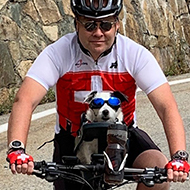
"Daisy is a bundle of joy and travels everywhere with us." - Pete Murden.
A diabetic detection dog who caught suspected COVID-19 is now back to full health after her ordeal.
The eight-year-old Jack Russell cross from Exeter, named Daisy, was adopted at four years old by Pete and Mo Murden, and it was soon discovered that she could detect low blood sugars before Pete, who is diabetic, could.
A few days after adoption. Daisy alerted Pete to his low blood sugar by scratching his leg until he took some glucose, and has acted as Pete's diabetic detection dog since then.
However, last summer Daisy became ill, and was referred to Cave Veterinary Specialists with symptoms of coughing, wheezing, shortness of breath and vomiting.
Diagnosed with a consolidated right cranial lung lobe, the cause of this condition remained unclear, however the Cave specialists could not rule out COVID-19 as a cause, with evidence suggesting that the virus can be transmitted to dogs.
Cave's clinical director and internal medicine specialist Nele Van den Steen, who worked on Daisy's case, commented: “This was a really interesting case which we’re delighted had a happy ending. It’s great to see Daisy still going strong a year on from when we first treated her.
“While we were able to make a clear diagnosis, I am still not clear regarding the cause of Daisy’s issues.
“Her almost-complete response to steroids would suggest that a bacterial or fungal pneumonia is excluded, and the same would count for a primary lung tumour. Temporary improvement with lymphoma would be possible but it would be highly unusual to be this long-lasting.
“Also, although no COVID-19 pneumonia in dogs had been reported previously, we could not rule it out.”
Daisy's owner Pete commented on the concerning ordeal: Daisy had constant coughing, loss of smell and taste, loss of appetite and a raging temperature, all symptoms of COVID-19. She went from being a healthy, active bundle of fun and energy to a sick, lethargic poorly dog in a few hours.”
Following Daisy's diagnosis, the Murdens took her to the French Alps on a holiday, in order to enjoy what could potentially have been her last few weeks of life, however the treatment and medication that Cave had provided worked wonders on Daisy, whose symptoms subsided.
“Cave’s care, dedication, treatments, lung wash, medication, skill and devotion to looking after animals saved Daisy. The clean pure mountain air in the Alps also helped to heal her lungs,” Pete added.
“Nele, her team and everyone at Cave, plus the initial care and referral from primary care vets in Exeter, certainly saved Daisy. They all worked miracles.”


 Defra has published guidance for the vet sector ahead of a proposed UK-EU Sanitary and Phytosanitary agreement.



