


First annual World Sloth Bear Day
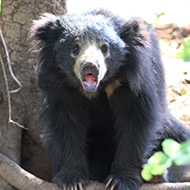
Photos (C) International Animal Rescue/Roger Allen.
The first annual World Sloth Bear Day, which takes place today – 12 October – is being celebrated by conservations worldwide, as organisations come together to call for greater measures to protect the species.
'Sloth bears', or Melursus ursinus are native to the Indian subcontinent, and are listed as Vulnerable on the IUCN (International Union for the Conservation of Nature) Red List.
The bears, identifiable by their long, shaggy dark fur, V-shaped chest patch and long curved claws, have dropped in population by 40 to 50 per cent over the last 30 years.
This population drop is attributed to habitat loss, habitat fragmentation, poaching and increased human-bear conflict.
Geeta Seshamani, co-founder of Wildlife SOS, said: “Sloth Bears have inhabited the Indian subcontinent for nearly 2 million years. They are the least researched bears in the world and we have a lot of mysteries to uncover about this unique species.
“It is our hope that 12 October every year will stand as a day to focus on sloth bear conservation worldwide.”
Suggested to the IUCN by Wildlife SOS, World Sloth Bear Day intends to promote the conservation of sloth bears and their habitats, encourage and accelerate research into the species, and increase public awareness of the bears and their plight.
Kartick Satyanarayan, co-founder of Wildlife SOS, discussed the purpose of the international day: “This day is a rallying call for people around the world to learn about this little known species and promote the conservation of sloth bears so we never see a day without this species.
“The public can help conserve India’s sloth bears by learning about their habitats and supporting organisations actively working to protect them.”
President of International Animal Rescue (IAR) Alan Knight OBE, added: “Since working with our partners Wildlife SOS to rescue dancing bears off the streets of India, I have come to appreciate what remarkable creatures sloth bears are.
“In spite of their resilience and adaptability, their population in the wild is declining owing to human activity, habitat loss, poaching for body parts and human-bear conflict. At International Animal Rescue we are extremely proud of the work we do with Wildlife SOS to protect and conserve sloth bears in India.
'We will certainly be marking 12 October as a special day for sloth bears and using it to increase awareness of the species and the many threats it currently faces.
“With only 6,000 to 11,000 sloth bears left in the wild in India, it is imperative to take action to conserve remaining populations.”


 Eligible members of BEVA will be able to vote for their Council team until Monday, 17 August 2026. Members will have received an election email on 17 July.



