


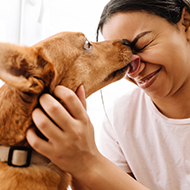
Appropriate hygiene measures could reduce infections.
Pet dogs are an overlooked transmission point for zoonotic pathogens such as antimicrobial-resistent Salmonella, according to new research.
Writing in Zoonoses and Public Health, researchers note that household dogs are a risk for the spread of antimicrobial-resistant Salmonella, and that greater awareness of the risk and proper hygiene could reduce cross-species infections.
According to team leader Erika Ganda, assistant professor of food animal microbiomes at Penn State, a major concern is the closeness of humans and pet dogs that creates opportunity for Salmonella zoonosis. Pet-management decisions involving food contamination, improper food handling or both can increase the likelihood of infection, she said.
In the study, researchers identified all non-typhodial Salmonella strains isolated from domestic dogs between May 2017 and March 2023.
They matched the timing and location of those 87 cases to strains isolated from humans in the National Center for Biotechnology Information database maintained at the National Institutes of Health. Strains isolated from dogs included diverse serovars, or distinct variations within the species of bacteria, with most being clinically relevant to human health.
Sophia Kennet, a student in the molecular, cellular and intergrative biosciences doctoral program, and in the Department of Animal Science, who spearheaded the study, said:
"We identified 16 nontyphoidal Salmonella isolates from humans closely related to more than one of six dog-associated strains.
"Collectively, our data emphasize the importance of antimicrobial stewardship and sustained biosurveillance beyond human and agriculture-associated veterinary medicine, using a 'One Health' framework, that accounts for all transmission points -- including companion animals".
Image (C) Shutterstock.


 Eligible members of BEVA will be able to vote for their Council team until Monday, 17 August 2026. Members will have received an election email on 17 July.



