


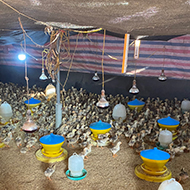
Study highlights major health implications for global food systems.
Chicken meat from Bangladesh, India and Northern Vietnam has been found to contain high levels of antimicrobial residues, significantly exceeding international safety limits.
The study by the Royal Veterinary College, conducted in collaboration with institutions in South and Southeast Asia, highlights major implications for public health and global food systems, particularly in regions where regulatory oversight may be limited.
Led by Ludovic Pelligand, professor of veterinary clinical pharmacology and anaesthesia at the RVC, researchers analysed 558 chicken breast samples collected between 2021 and 22 at the end of the production cycle and at point-of-sale locations in each country.
Their findings revealed a high prevalence of non-compliant samples. At some points of sale, between 3.7 per cent and 8.6 per cent of samples exceeded safety limits, compared to around 0.05 per cent to 0.09 per cent in the EU for the same period.
Researchers suggest the primary causes are the overuse of antimicrobials, potential administration too close to slaughter, and contaminated feed or water.
‘The high prevalence of the residues ‘represents a public health concern at national and regional levels,’ the team writes, ‘raising the urgent need for robust residue surveillance platforms to test products destined for local consumers in these and other countries where poultry production intensifies rapidly.’
The researchers will next investigate how antimicrobial use throughout the poultry production cycle contributes to residue levels in meat and the development of antimicrobial resistance.
Ludovic Pelligand said: “This is a landmark study as until now, no cross-country residue data was available with the same standardised methodology in Asia. It required a sustained international effort, for analytical method transfer, sample collection, to coordinated parcel of frozen parcels. We hope the momentum provided by the study will help raise awareness about veterinary drug residues and improve food safety locally.”
Image (C) Nhat Thi Tran.


 Eligible members of BEVA will be able to vote for their Council team until Monday, 17 August 2026. Members will have received an election email on 17 July.



